A gyratory crusher spider bushing is a plain sliding sleeve in the spider assembly at the top of a primary crusher. It supports the upper mainshaft journal inside the spider’s central hub as the shaft gyrates. For a custom replacement, buyers need to identify that exact interface before discussing alloy, dimensions or price.
“Spider bushing” also names unrelated parts. Specify the crusher model and assembly position; a part number alone does not confirm the current shaft or bore condition.
Where Does the Spider Bushing Fit in a Gyratory Crusher?
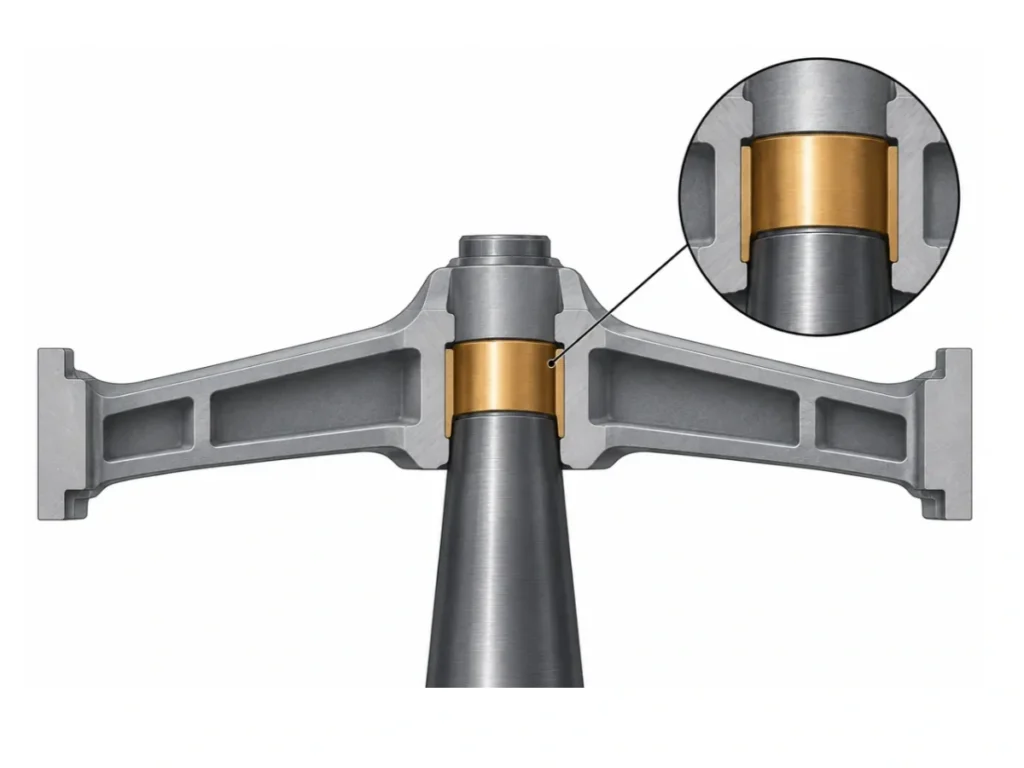
The spider arms cross the crusher opening and hold the central hub. Within that hub, the bushing surrounds the upper end of the mainshaft. Its inner surface works against the shaft journal; its outer surface seats in the spider bore. This is the upper sliding support, above the crushing chamber.
In a section view, the spider cap is above the hub, while the shaft enters the hub from below. The bronze sleeve lies between the shaft and hub; the cap, arms and mantle are not the bushing being quoted.
It differs from a lower eccentric bushing and from bushings in cone crushers. Use a marked assembly drawing rather than a photograph of a similar-looking sleeve.
Some designs include a flange, shims, a scraper, seals and a retainer. Mark the bushing and these associated parts separately on the drawing.
Which Material and Lubrication Details Must Match the Design?
“Bronze” is not a complete material specification. Metso documents a manganese-bronze spider bushing for its Superior gyratory crusher upgrade. That example does not make manganese bronze the required alloy for every machine. Nor should the part be called aluminum bronze because that alloy appears in other heavy-duty bushings.
Request the original grade and standard or an approved specification. Sample analysis may identify an unknown alloy, but an equipment engineer must approve any material change.
The original component may be steel in a different arrangement. Changing to bronze is a design decision involving the shaft surface, load, lubricant and seat, not a substitution based on color or a supplier’s life claim.
An OEM example uses a tapered bushing and shims to control seating in a worn spider bore. Do not apply that design to another model without approval. Confirm whether your part has a straight or tapered seat, flange, shoulder or shims.
Show the oil or grease route, feed holes, grooves and seal interfaces. A damaged seal can leak lubricant. Do not add graphite plugs or delete a feed to market the part as “oilless.” Match the approved lubrication design.
What Drawing and Mating-Part Data Are Needed for Manufacture?
A drawing must define two interfaces: bushing ID to upper mainshaft journal and bushing OD to spider-hub bore. Running clearance and outer seating fit are separate requirements; nominal crusher size cannot set either.
For a custom spider bushing RFQ, provide:
- Crusher make, model, serial number, part number and drawing revision.
- Bushing ID, OD, length, flange or shoulder dimensions, and tolerances.
- Upper journal diameter, surface condition and specified finish.
- Spider bore dimensions, roundness, taper and seating depth, as applicable.
- Shim position or stack, if the design uses shims.
- Oil holes, grooves, feed direction, seal seats and retainer details.
- Material grade, inspection points, quantity and required delivery date.
For worn equipment, measure the shaft and spider bore at several heights and angles. Note scoring, ovality and prior repairs. Do not copy a worn sleeve diameter as the new-part target; compare measurements with approved limits.
State whether tolerances apply to the loose bushing or to its bore after installation. A seating fit can change the final ID. Identify the datum and method for checking any critical concentricity or contact pattern; otherwise a drawing may appear complete while leaving acceptance open to interpretation.
For a tapered seat, state its reference dimensions, installation depth and inspection method. Define shim dimensions and supply scope if applicable. “Machine to fit” leaves the interface undefined.
Our bronze bushing dimensions guide explains ID, OD and length notation; this position also requires assembly data.
Request a Quote for Custom Spider Bushings
JEDBUSHING manufactures custom bronze parts to approved drawings, including sleeves, flanged parts and oil features. Our mining machinery components serve B2B equipment and replacement-part projects.
Send the bushing drawing, relevant spider assembly section, material specification and required quantity. Include measured shaft and hub data when the existing equipment is worn. We can review the manufacturing scope, inspection needs and missing information before preparing a quote.
Send your spider bushing drawing for a quote.
Frequently Asked Questions
Are seals, shims and retainers included with the bushing?
Only if those items are included in the agreed quotation. List each required component and its specification so the scope of supply is clear before production.
Can you make an oversize bushing for a worn spider bore?
A revised size can be reviewed against verified bore measurements and an approved drawing. The equipment engineer must define the new seat and fit; increasing the OD without that review may create another assembly problem.
Which material and inspection records can be supplied?
Specify the required material certificate, chemistry results and dimensional report in the RFQ. We will confirm the available records and agreed inspection points during quotation.
Is a single emergency replacement available?
We manufacture custom B2B parts rather than retail stock items. Feasibility, minimum order quantity and lead time depend on the alloy, casting route, size, machining and inspection requirements; include your deadline in the inquiry.