
Not every bronze bushing has the same accuracy requirements. A small bushing with general tolerances may be less sensitive to temperature change than a large, thin-wall or close-fit component.
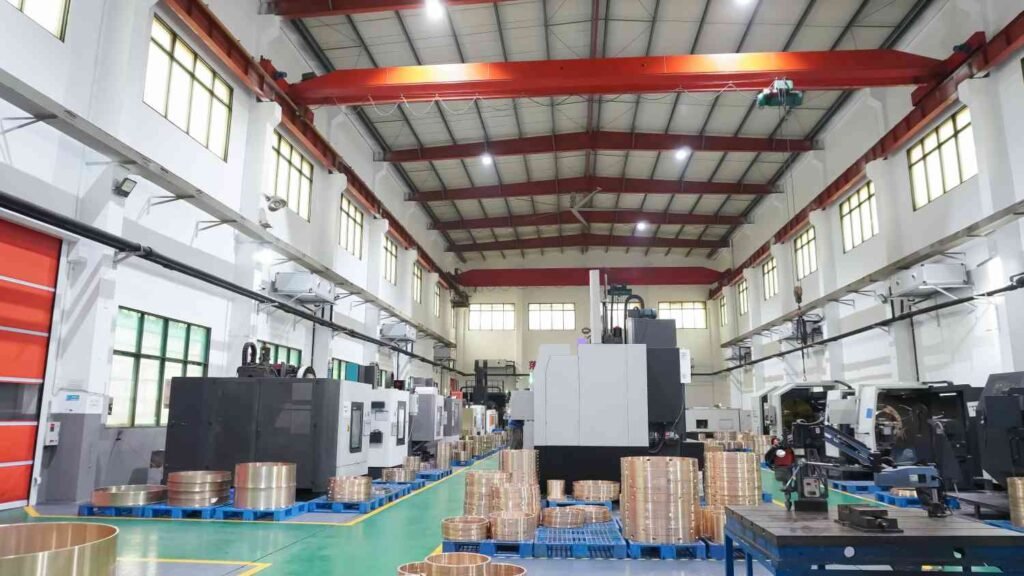
However, stable workshop conditions become important when machining and inspection results must remain consistent. JED uses temperature-controlled machining and inspection workshops for bronze bushings, supporting projects with demanding dimensional and geometric requirements.
Why Temperature Affects Bronze Bushing Accuracy
Bronze bushings expand as their temperature rises and contract as it falls. The change may be small, but its effect becomes more noticeable across a large diameter or long length.
Temperature also affects the machining and inspection process. Cutting generates heat, while machine tools, fixtures and measuring equipment can change with their thermal condition. If the workpiece and measuring equipment are at different temperatures, a critical dimension may not be evaluated consistently.
A stable environment helps reduce these variations during finish machining and final inspection.
When Is Temperature Control Most Important?
Temperature control is particularly valuable for the following types of bronze bushing projects:
| Project characteristic | Why it matters |
|---|---|
| Large diameter or long length | A small temperature-related change has a greater effect across a larger dimension. |
| Thin-wall construction | The part can be more sensitive to cutting heat, clamping and deformation. |
| Tight OD or ID tolerance | Small dimensional changes may affect the shaft or housing fit. |
| Small running clearance | Variation can influence assembly and operating clearance. |
| Strict roundness or concentricity | Stable conditions support consistent machining and verification of geometric tolerances. |
| CMM inspection | The workpiece and inspection environment need to be stable for reliable dimensional results. |
The drawing, alloy, dimensions, wall thickness, tolerances and inspection requirements should be reviewed together. Diameter alone does not determine whether a part needs closer temperature control.
How JED Controls Machining and Inspection
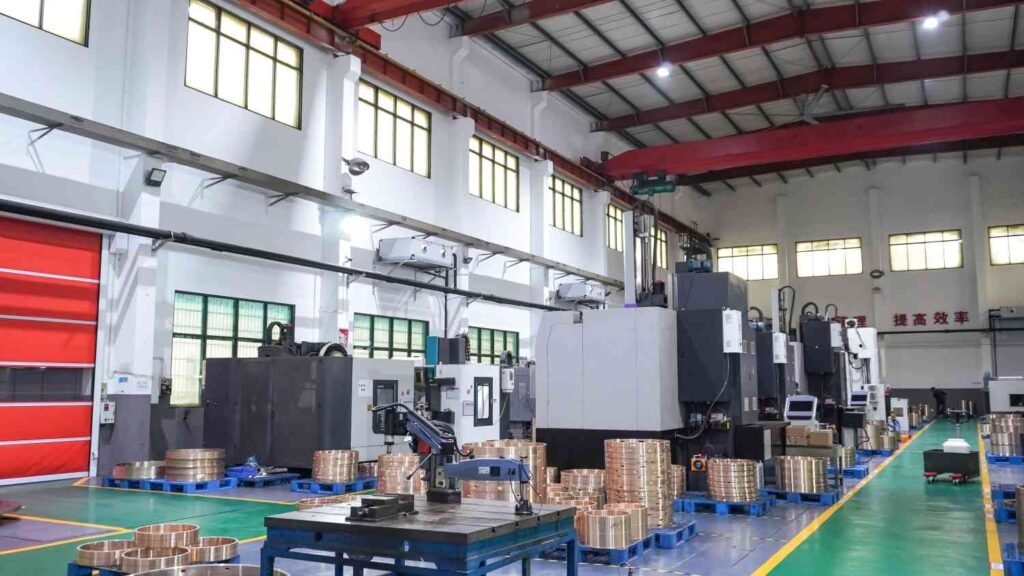
JED’s bronze bushing machining workshop and inspection workshop are both temperature controlled. This provides stable conditions across two separate stages of production.
During machining, the process is planned according to the part geometry and drawing requirements. Rough machining establishes the main surfaces and machining references. Finish machining then produces the final OD, ID, end faces, grooves and other specified features.
For large or thin-wall bushings, the machining sequence and clamping method also need careful review. Removing material or applying excessive clamping force can affect part geometry even when the surrounding temperature is stable.
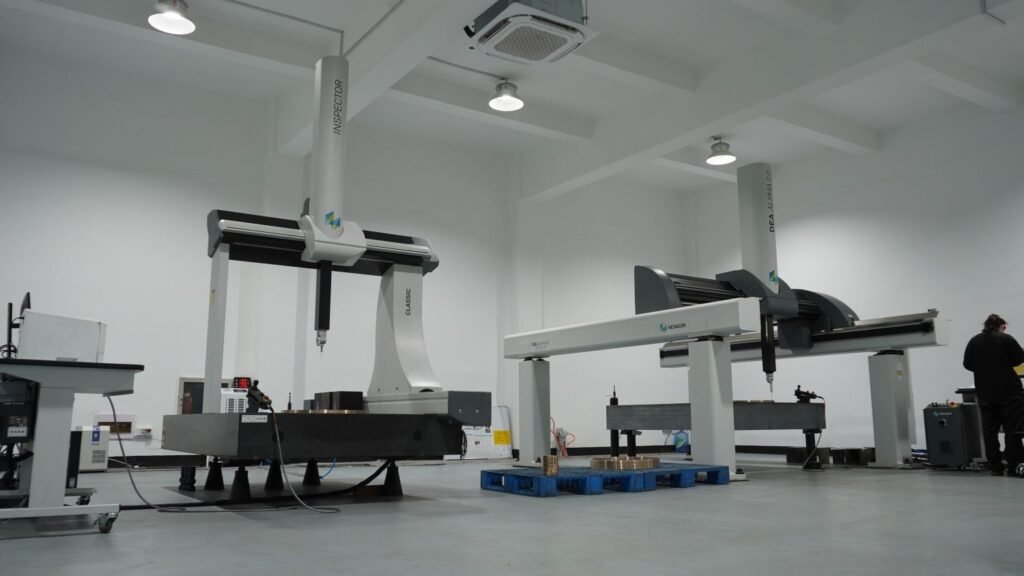
After machining, dimensions are checked using the inspection method confirmed for the order. Conventional measuring equipment can be used for suitable features, while coordinate measuring machine inspection may be arranged when specified dimensions or geometric tolerances require it.
Temperature control is therefore one part of the complete accuracy plan. It works together with machining allowance, process sequence, fixturing, measurement method and the acceptance criteria on the drawing. More information is available on JED’s inspection equipment and quality-control capabilities.
Workshop Temperature and Operating Temperature Are Different
A temperature-controlled workshop supports accurate manufacturing and inspection. It does not determine the bushing’s final fit under every operating condition.
In service, a bronze bushing may work with a steel shaft, a housing made from another material, changing loads and varying temperatures. These components may not expand at the same rate. The equipment designer should therefore define the required fit and running clearance for the actual application.
If operating temperature may affect assembly or clearance, include it with the inquiry. JED can then review the drawing and manufacture the bushing to the confirmed dimensional requirements.
What to Send for a Project Review
For a custom cast bronze bushing project, please provide:
- Part drawing
- Alloy grade or material standard
- OD, ID, length and wall thickness
- Fits and dimensional tolerances
- Roundness, concentricity and other geometric tolerances
- Surface-finish requirements
- Expected operating temperature
- Quantity
- Inspection method and report requirements
If a complete drawing is not yet available, send the known dimensions, application information and photos of the assembly position. JED can review the casting route, machining feasibility and inspection scope before quotation.
Contact JED to discuss your bronze bushing requirements.